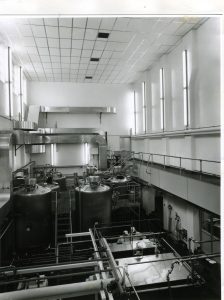
Marching to the Great War
10th August 2024 by Leave a Comment

This postcard was sent to Mrs Ayres, Fivebridges Farm, Hemyock in 1915 with a picture of the Wiltshires cheering on their way on the Great Advance.
Postcard from the Great War
10th August 2024 by Leave a Comment

This postcard of the Wiltshires cheering on their way to the Great Advance in 1915 was sent to Mrs Ayres, Fivebridges Farm, Hemyock.
Hemyock Football Club in 1934
6th June 2024 by Leave a Comment

Mr Frank Mellhuish took an active part in many activities in Hemyock. In addition to his position as chairman of the football club as shown in the photo, he was also a member of the bowls club and captain in 1928 when he presented a two-guinea Silver Challenge cup and another cup in 1941 as reported in “The Book of Hemyock”. He became president of the bowls club in 1943. This would have been shortly before his death in October of that year when I remember being a choirboy and following the coffin from the church to the cemetery. He was also responsible for supporting the school with a Good Fellowship prize awarded to the boy and girl voted as being the most popular amongst the pupils. The prize was one guinea. He also paid for a class from the school to visit the cinema in Taunton on more than one occasion. In 1935 he and his wife were living in High Street at Fircroft.
History of the Blackdown Surgery
8th March 2024 by Leave a Comment
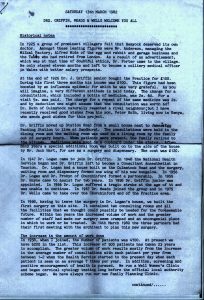 This document was written in 1982 about the History of Doctors serving the communities from the Blackdown Surgery, with the first Doctor arriving in Hemyock in 1925 when Dr Griffin senior arrived. It states that in 1958 there were 4700 patients and 23 years later there were 5,200. In 1947 Dr Logan came to join Dr Griffin and in 1948 the National Health Service began and Dr Griffin left to become a consultant Anaesthetist in Taunton. Dr Logan had a house built on the Culmstock Road and the surgery and dispensary formed one wing of his new bungalow. In 1956 Dr Logan and Dr Probyn of Churchinford formed a partnership. In 1955 Dr Hayne came to assist for two years. In 1958 Dr Griffin junior was appointed. In 1967 Dr Meads joined the group and in 1975 Dr Wells came to take over the Churchinford end of the practice.
Hemyock 1830 – 1850 A Parish and its People in the Past
22nd February 2024 by Leave a Comment
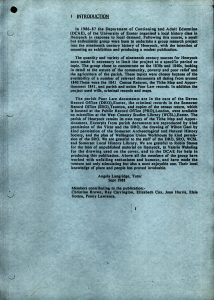
In 1986 and 1987 the Department of continuing and adult education at the University of Exeter organised a local History Class in Hemyock into the 19th century history of Hemyock with the intention of mounting an exhibition and producing a publication based on the documentary evidence available. This document is held by the Hemyock History and Archiving Association.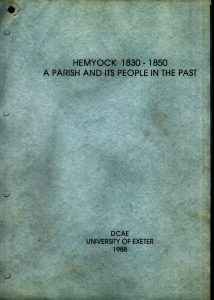
Hemyock Castle
11th December 2023 by Leave a Comment
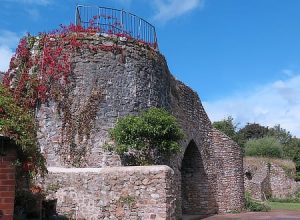
Hemyock Castle was in use from 1380 until the 1660s. In 1459 when the future Edward IV, the Earl of March, realised that the army assembled to support Henry VI at Ludlow was far larger than his meagre force and his father, the Duke of York slipped away to his lands in Ireland, Edward turned to his Captain Sir John Dynham to carry him off to a safe haven. Sir John Dynham owned Hemyock Castle and also, crucially Hartland Abbey with its Quay on the western corner of North Devon so managed to extract Edward from danger in England and sail him off to Calais where the Yorkist General, the Earl of Warwick, was based. Within 2 years Edward was 19 and supported by a large army on the south Coast marched on London in triumph and take the crown of England. For more information on the history of Hemyock Castle go to
Insert > Link https://www.hemyockcastle.uk/
Hemyock Castle. More details of the castle and its history can be accessed at:- https://www.hemyockcastle.uk/
11th December 2023 by Leave a Comment
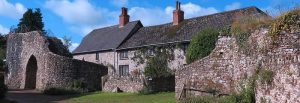
Hemyock Castle. More details of the castle and its history can be accessed at:-
https://www.hemyockcastle.uk/