Historic books on Exeter and Devon available now
17th July 2018 by Leave a Comment
From: Mike Walker <info@woodsidebooks.co.uk>
Subject: Devon Books
I am reluctantly downsizing my house and books The books, all postage-free, are on my website at www.woodsidebooks.co.uk
Please do look at this website which displays a fantastic selection of historic books of our area.
Many no longer in print.
Clayhidon Rectory 1900
25th October 2017 by Leave a Comment
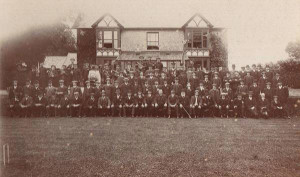
Men of Clayhidon with brass band in 1900
Hemyock Baptist Church
31st August 2017 by Leave a Comment
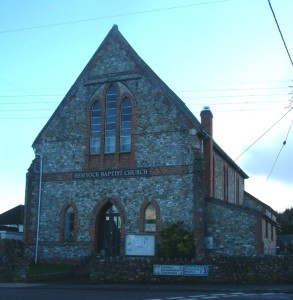
This is a picture of the Hemyock Baptist Church in 2012 celebrating the jubilee of the building of the new Baptist Church.
The children of John and Caroline New at Craddock
7th June 2017 by 2 Comments
Caroline John Somers Johanna Vernon Arthur
1866-1926 1871-1960 1868-1942 1879- ????
went to California
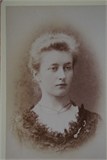
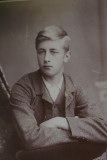
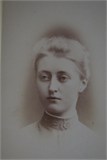
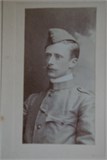
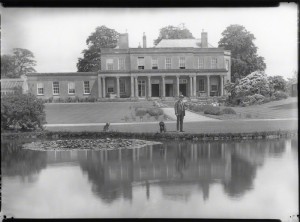
Henry Harcourt New 1874-1961 at Craddocks by Lafayette June 1932
History Talks for April and May 2017
17th March 2017 by Leave a Comment
The 13th April talk will be from David Greenfield a civil engineer from Taunton on the life and works of I K Brunel. The 11th May talk will be a talk from Phil Andrews of Wessex Archaeology on recent finds in Devon
History Group Talks February and March 2017
17th March 2017 by Leave a Comment
On the 9th of February HH&A heard a talk from Andrew Watson, PhD Candidate at the University of Glasgow, on phenomenology and its application in archaeology.
Andrew began by focusing on the history of phenomenology, which is a branch of Western philosophy that is concerned with how people perceive a phenomenon, and looked at the works of Edmund Husserl, Martin Heidegger and Maurice Merleau-Ponty. Andrew summarised the approaches that archaeologists had undertaken to date and discussed three key studies incorporating landscape studies, a study of sound and the transferring of hand signals in a Neolithic ditched enclosure in Italy and closer to home, some archaeoacustic studies looking at the effect of sound in Neolithic long barrows. Finally Andrew outlined his Doctoral studies and his approach to phenomenology. Using four Neolithic long barrows as case studies Andrew hopes to better understand people’s bodily and sensorial engagements with Neolithic long barrows in the modern day.
The March talk was given by Brian Carpenter from the Devon Heritage Centre on the documents and information on the Hemyock area stored at the centre. Brian brought to the meeting a list of the registers showing the documents stored in safe custody related to various properties in the Hemyock area plus documents related to the Culmstock Rural District Council which included the parishes of Clayhidon, Hemyock and Culmstock. Brian also listed the various books displayed on the public shelves listing the historical information stored within the centre, including the Register of Births, Marriages and Deaths with:
Christenings from 1635-1959
Marriages from 1635-2007
Burials from 1635-1923
His talk was a very good way of understanding how to trace documents and other material stored within the centre and how various research projects can progress efficiently by visiting the centre and accessing the material that is available. Brian also left with us the route in words of the Bounds of the Parish of Hemyock from 1754. An interesting project would be to reintroduce the practice of Walking the Parish Bounds on Rogation Sunday. We are hoping to form a team interested in progressing a number of research projects.
Talk by Brian Carpenter of Devon Heritage Centre on Thursday 8th March
28th February 2017 by Leave a Comment
The monthly meeting on Thursday 8th March at the Hemyock Church Rooms at 7.30pm will be by Brian Carpenter of the Devon Heritage Centre, Exeter.
Come along and find what information is stored at the Heritage Centre, how you can access this information and what research you can accomplish:
What information is stored on Hemyock history.
What Culmstock Rural Council files, which included Hemyock Parish, are available.
What information is stored on Families, Estates and Houses in the area.
plus any other questions you would like to raise.