The Great War Project

The 4th of August 2014 marks 100 years to the day since the Great War started. With such a big event that affected the lives of so many, the Blackdown Archives are pleased to announce plans for a major WW1 research project incorporating the villages of Hemyock, Culmstock and Clayhidon.

The project will focus on two main areas of research. Firstly we will be looking at the lives of fallen soldiers and secondly what life was like for those left behind.

With over 40 fallen soldiers, we plan to uncover as much information as we can on the lives of these young men leading them into to service and subsequently about their time in the forces.

As for the villages mentioned above, we will look at how the war affected village life in areas like farming and agriculture, the local economy and the roles of women in the villages, along with my many more.

The project will culminate in the production of a theatrical performance that we hope to run at the start of August 2014 to mark the centenary of the start of the war. Along with this, we hope to publish a book detailing the lives of the soldiers we have researched along with the effect on the villages.
Its and exciting project and with just under one year until the centenary it is a big undertaking, but one we all feel will be rewarding.

Can I help?

We are always keen to hear from people who may be able to help. Whether it’s volunteering your time or if you have information that you think could be helpful, do get in touch with us.

At present, we could do with volunteers in the following areas:
• Research (both online and local heritage centres)
• Book writing
• Script writing
• General help

If you are keen to volunteer or have information that may be beneficial, please feel free to attend a meeting on Tuesday 3rd September 2013 in the Hemyock Church rooms. Alternatively, you can email us at ww1@blackdownarchives.org.uk.

We will be regularly updating our website with the progress of the project so keep checking back to see how were getting on.

Clock offers link to 1940s Hemyock industry

A special ‘nightwatchman’s’ clock is going on display in Hemyock, offering a glimpse of factory life in the village 70 years ago.

The clock has been put on permanent display at the Blackdown Healthy Living Centre at Millhayes in Hemyock by the Hemyock History & Archiving Association.

The building was once the canteen for the milk factory complex which existed on the site throughout the twentieth century producing cream, spreads and ice-cream powder as well as sending milk to London by rail.

During the 1940s, the factory’s nightwatchman would carry the clock with him on his rounds, inserting keys held at various points along the way which would mark a roll of paper inside. In this way, factory bosses could be sure that he was patrolling everywhere he was supposed to. Today, similar functions are performed by smart phones and GPS technology.

The clock, which was made in France, was donated to the Association by Michael Lowman, son of factory foreman Edgar Lowman. He remembers it being used in his childhood by nightwatchmen Jack Wood and Charlie Northam.

The project to display the clock was made possible thanks to a grant from the Sustainable Development Fund, which is administered by the Blackdown Hills Area of Outstanding Natural Beauty Partnership.

To see the clock, visit the Blackdown Healthy Living Centre between 9am – 4pm on Mondays, Tuesdays and Thursdays, and 9am – 12noon on Wednesdays.

Our trip to Longforth Farm

On Friday 12th July, members of the history and archiving society visited Longforth Farm in Wellington. The site, owned by Bloor Homes for redevelopment, was opened to local history societies to explore with talks lead by several of the site archaeologists.

Longforth Farm is an unusual site. Occupied between the 12th and 14th centuries this site was probably bustling with people, quite possibly this could have been the centre of a small settlement. However over the past 600 years there has been absolutely no trace of such a site until the excavation by Bloor Homes and Wessex Archaeology. Bob Davis from Wessex Archaeology said “This [site] is a significant find and therefore very exciting, particularly as there are no documentary records that such a site ever existed here’.

Several glazed ceramic tiles have been uncovered along with decorated floor tiles, thus indicating it may have been occupied by someone important or may have been a religious or manorial site. Some such tiles, as one illustrated with a knight on horseback, has added to the belief that Longforth Farm was a location visited by important people like bishops. The only other site where such tiles have been found is that of Glastonbury Abbey.

“These are our latest finds and the decorated floor-tiles have given us an avenue to pursue – they have raised the importance of this place for us” commented Bob Davis from Wessex Archaeology.

What is equally interesting about Longforth Farm, apart from it not appearing in historical archives, is the lack of evidence that has been left. Again, Bob Davis explains that “At some stage… the buildings were abandoned, the useable building materials were robbed out and recycled and the site was forgotten.”

The dig concluded at the end of July so we are hopeful that a full report will come out in time. For more information on Longforth Farm visit Wessex Archaeology’s website at www.wessexarch.co.uk.

Devon Remembers

DEVON REMEMBERS

The Great War started for Britain in August 1914 after Germany invaded Belgium en route to France. The Devon Roll of Honour of 19,000 names contains 19 from Hemyock, 23 from Culmstock and 6 from Clayhidon.

Hemyock Council would like an event to coincide with this centenary to be staged around the Pump and War Memorial in August 2014 when the BBC are also planning events on prime time television.

John Somers, a fellow of Exeter University, who has staged such events in the past will be attending a meeting in the Church Rooms on June 6th in Hemyock at 7.30pm to discuss his ideas for a centenary event in the Culm Valley.

Everyone is welcome to attend and suggest how the event should be planned and who should be involved. John will be presenting the events that have been staged previously some of which have generated national interest.

Hemyock School Photo 1955/56

Hemyock school photo 1958-1-1This picture of Hemyock School during term 1955/56 and has just been sent in by a pupil in the photo.
Hemyock ‘Then and Now’ featured in The Somerset Gazette

‘Hemyock Then and Now’ DVD featured in the Somerset Gazette in November 2012 and here is what they had to say:

“The Hemyock History Association has produced a DVD about the Hemyock Milk Factory, which used to employ more than 350 people. The DVD tells the story of a happy workplace on a site which has since been taken over by houses. Copies are available from Michael Cooper on 01823 680175 and costs seven pounds.

DVD Hemyock Then and Now

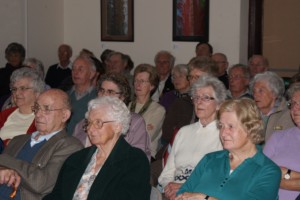
Preview Screening of DVD Hemyock Then and Now

DVD Hemyock Then and Now

The Preview Screening of the Film about the Hemyock Milk Factory in October 2012.The film tells the story of the factory from 1887 until it closed in 1999.

DVD Hemyock Then and Now.

A new DVD of Hemyock over the years is now available from this web site. It tells the story of the Milk Factory from 1886 until it closed for good in 1999. In the latter stages it was employing over 350 people making the national supply of low fat spread. Local people tell the story of the friendly atmosphere and what is hapopeneing in Hemyock now. Send us a message to order a copy for

DVD Hemyock Then and Now

The Preview Screening of the new DVD will be at the Healthy Living Centre at 2.30pm and 4.30pm on Wednesday 17th October. This is the story of Hemyock and its people through the years. From the setting up of the Milk Factory in 1886 and the collecting and processing of of Milk from the farms in the Blackdown Hills and its national distribution by rail. To the closure of the railway line in 1975 and the factory in 1999 and what new stories are being written today.